Welcome to my website

What is the Schumann Resonance?
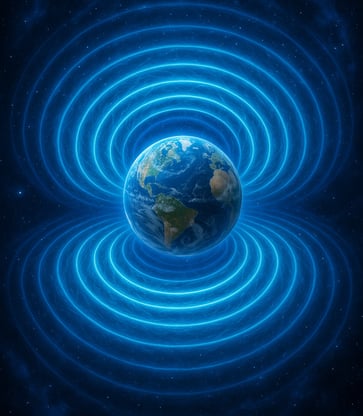
The Schumann Resonance refers to a set of extremely low-frequency (ELF) electromagnetic waves that resonate within the cavity between the Earth's surface and the ionosphere.
SPIRITUALITY
6/24/202513 min read
Why the Schumann Resonance Is Capturing Global Attention
Have you ever heard the Earth hum? Not in the poetic sense, but literally, it’s a frequency that pulses quietly around our planet. This phenomenon is known as the Schumann Resonance, and it’s been called everything from the Earth's “heartbeat” to a bridge between science and spirituality.
First discovered in the 1950s, the Schumann Resonance refers to a set of extremely low-frequency (ELF) electromagnetic waves that resonate within the cavity between the Earth's surface and the ionosphere. What’s fascinating is that one of its primary frequencies, 7.83 Hz, closely aligns with the natural brainwave frequencies of humans—especially those associated with relaxed and meditative states.
In recent years, this once-obscure geophysical concept has gained significant traction online. People are now wondering if fluctuations in the Schumann Resonance could be influencing our mood, health, or even the global collective consciousness. Some claim it’s proof of a rising planetary vibration, while others caution against pseudoscience.
So, what’s the truth?
What Exactly Is the Schumann Resonance?
At its core, the Schumann Resonance is a natural electromagnetic phenomenon that occurs in the space between the Earth's surface and the ionosphere—a layer of charged particles high in the atmosphere. Think of this space as a massive waveguide or resonant cavity, where low-frequency electromagnetic waves can bounce back and forth, creating standing waves under the right conditions.
This idea was first mathematically predicted by German physicist Winfried Otto Schumann in 1952. He theorized that since the Earth and the ionosphere form a closed system, they should be capable of sustaining electromagnetic resonances. His calculations showed that the lowest resonant frequency in this system would occur at around 7.83 Hz—and thus, the term Schumann Resonance was born.
Later experiments confirmed his theory, showing that global lightning activity produces continuous waves in this frequency range. Every time lightning strikes, it releases a burst of energy that contributes to this global frequency, essentially “striking the bell” of the Earth-ionosphere cavity.
Key Characteristics:
Primary Frequency: 7.83 Hz (the fundamental tone).
Nature: A standing wave—meaning it doesn’t travel from one place to another but instead oscillates in place.
Range: Exists in the Extremely Low Frequency (ELF) band, between 3 Hz and 60 Hz.
Global: It’s present around the world, and consistent enough to be used for scientific and atmospheric monitoring.
Why It Matters:
The Schumann Resonance is not just a scientific curiosity. Its frequency lies within the same range as human alpha and theta brainwaves, which are associated with relaxation, intuition, and meditative states. This overlap has led to intriguing theories about a deep connection between Earth's rhythms and our own biological and mental processes.
So while it begins as a geophysical phenomenon, the Schumann Resonance may reach into far more personal and even philosophical realms - a theme we’ll explore throughout this article.


Why Is the Schumann Resonance Often Called the Earth’s “Heartbeat”?
You might have heard people refer to the Schumann Resonance as the “heartbeat of the Earth.” While this isn’t a scientific term, it captures a poetic truth about how this global frequency connects all life on the planet in subtle yet profound ways.
At 7.83 Hz, the Schumann Resonance pulses continuously through the Earth’s electromagnetic field. Because it’s created by lightning strikes resonating between the ground and the ionosphere, this frequency is ever-present, much like a background rhythm—quiet, steady, and almost imperceptible. It’s no surprise that some see it as Earth’s natural heartbeat, gently keeping time for life on this planet.
A Symbolic and Biological Connection
What makes this metaphor especially compelling is that 7.83 Hz is strikingly close to the frequency range of alpha brainwaves—the brain state we enter during deep relaxation, meditation, and the moments just before sleep. It’s also similar to the rhythm of theta brainwaves, which are linked to creativity and intuition.
Some researchers and spiritual thinkers suggest that this resonance acts as a kind of biological tuning fork for the human brain and body. The idea is that when we’re exposed to this frequency—especially through activities like grounding (walking barefoot on the Earth), spending time in nature, or listening to sound therapy—we may naturally sync up with it, leading to greater calm and coherence.
Fun Fact: Astronauts in early space missions reported feeling disoriented and anxious while outside Earth's electromagnetic field. Later missions included artificial 7.83 Hz frequencies in spacecraft to help stabilize their physiological rhythms.
The Metaphor’s Impact
While scientists don’t use “heartbeat of the Earth” in a technical sense, the phrase has become a powerful metaphor in wellness communities, holistic practices, and New Age circles. It expresses a growing recognition that we are not separate from the Earth but are rhythmically and energetically tied to it.
Even if the Earth doesn’t literally have a heartbeat, the Schumann Resonance reminds us that something subtle and foundational is always pulsing beneath our feet—a reminder of the deep connection between the planet and our own inner rhythms.
What Frequencies Are Associated with the Schumann Resonance?
Although 7.83 Hz is the most commonly cited frequency of the Schumann Resonance, it’s just the fundamental frequency—the first and lowest in a series of harmonics. Just like a musical note can produce overtones, the Earth’s electromagnetic cavity generates multiple frequencies that form a resonant “symphony” encircling the globe.
The Primary and Harmonic Frequencies
The Schumann Resonance includes several predictable frequencies, which scientists have measured with increasing accuracy over time. These are the main ones:
1st Harmonic: 7.83 Hz (fundamental frequency)
2nd Harmonic: 14.3 Hz
3rd Harmonic: 20.8 Hz
4th Harmonic: 27.3 Hz
5th Harmonic: 33.8 Hz
These frequencies are not randomly spaced but follow a mathematical relationship based on the size and shape of the Earth-ionosphere cavity.
Pro Tip: If you're using Schumann Resonance frequencies for sound therapy or meditation, you may notice these harmonic frequencies are often embedded into tracks to create a more immersive experience.
Frequency Ranges and Their Meaning
Here’s a simplified breakdown of how these frequencies align with brainwave states and other natural phenomena:
This resonance spectrum essentially creates a vibrational backdrop to life on Earth. While the exact influence of these frequencies on human health and consciousness remains a subject of debate, their persistent presence offers a compelling avenue for exploration—especially in wellness, neuroscience, and energy medicine fields.
Are These Frequencies Always Stable?
Interestingly, while the frequencies themselves remain relatively consistent, their amplitude (or intensity) can vary based on solar activity, lightning storms, and other atmospheric conditions. These fluctuations can cause the Schumann Resonance to appear “louder” or more active, which we’ll explore in more detail in a later section.
Can the Schumann Resonance Affect Human Health and Consciousness?
The idea that the Schumann Resonance might influence human well-being is both captivating and controversial. On one hand, the scientific community acknowledges the resonance’s presence and studies its interaction with atmospheric and biological systems. On the other, alternative wellness communities embrace it as a tool for healing, balance, and even expanding consciousness.
So what’s the truth? Let’s explore both perspectives.
The Science Behind Brainwave Resonance
Human brainwaves fall into several frequency bands, and some of these overlap closely with the Schumann Resonance:
Delta (0.5–4 Hz): Deep sleep
Theta (4–8 Hz): Dreamy, meditative states
Alpha (8–12 Hz): Relaxed, calm, reflective state
Beta (12–30 Hz): Alert, active thinking
Gamma (30–100 Hz): High-level cognition
Since 7.83 Hz falls within the theta-alpha range, it’s speculated that our brains may entrain to this frequency when exposed to it—meaning our brainwaves could naturally sync with the Earth’s rhythm, promoting a relaxed and harmonious mental state.
Health and Wellness Implications
Some researchers have explored how ELF frequencies (like Schumann Resonances) might impact biological systems. Notably:
Michael Persinger, a neuroscientist, studied how low-frequency electromagnetic fields influence brain activity and suggested links to altered states of consciousness.
A 2006 study published in Neuroscience Letters found that exposure to ELF magnetic fields could improve reaction times and cognitive performance in humans.
The HeartMath Institute has conducted ongoing research on how global electromagnetic fields, including Schumann Resonances, correlate with human emotional states and group coherence.
Case Study Highlight: The Global Coherence Initiative by HeartMath tracks how changes in the Earth's electromagnetic field may relate to mass human emotional events—like meditation gatherings or global crises.
Alternative and Holistic Perspectives
In wellness communities, the Schumann Resonance is often viewed as a natural healing frequency. It’s used in:
Sound therapy: Tuning music and meditative audio to 7.83 Hz to induce calm.
Grounding or earthing: Walking barefoot to “sync” with Earth’s EM field.
EMF protection tools: Devices that claim to neutralize artificial electromagnetic interference by mimicking or amplifying SR frequencies.
While scientific validation for many of these practices is limited, anecdotal reports are widespread—many people report feeling calmer, more centered, or mentally clear when exposed to Schumann-tuned frequencies.
Healthy Skepticism and Open-Minded Exploration
It’s important to balance curiosity with critical thinking. While there’s no doubt that we live in an electromagnetic world—and that our bodies are sensitive to it—more peer-reviewed research is needed to confirm how, and to what extent, the Schumann Resonance directly affects human biology.
That said, the overlap between Earth’s frequencies and our own brain states is more than just a coincidence. It invites a deeper look at the hidden rhythms that might shape how we feel, think, and experience life.


How Is the Schumann Resonance Measured Today?
The Schumann Resonance isn’t just a theoretical concept—it’s a measurable and observable phenomenon. Thanks to advancements in technology and global monitoring networks, scientists can now track these frequencies in real time, giving us a window into the electromagnetic pulse of our planet.
Tools and Techniques Used to Measure SR
The Schumann Resonance falls within the Extremely Low Frequency (ELF) range—making it difficult to detect without specialized equipment. Here's how researchers measure it:
ELF Antennas: These large, sensitive devices are often buried underground or housed in shielded areas to detect low-frequency electromagnetic signals
Magnetometers: Instruments that measure fluctuations in the Earth's magnetic field, often picking up changes linked to SR
Monitoring Stations: Located around the globe, especially in remote and electrically “quiet” environments like Antarctica or Siberia, where human-made electromagnetic noise is minimal
One well-known organization monitoring SR data is Tomsk State University in Russia, which provides real-time graphs that show activity across multiple harmonics of the Schumann Resonance. These graphs are often referenced in wellness and spiritual communities—sometimes without proper interpretation.
Interpreting the Graphs and Data
SR monitoring graphs typically display:
Amplitude: The intensity or strength of the frequency waves
Frequency Bands: Ranging from 0 to 40+ Hz, showing the fundamental and harmonic tones
Time Axis: Usually in UTC (Coordinated Universal Time), showing changes over a 24-hour period
It’s important to note that amplitude fluctuations don’t mean the Earth's frequency is “rising” or “breaking.” They simply reflect changes in the intensity of the signal—often due to lightning activity, solar flares, or ionospheric shifts.
Quick Tip: Just because a spike appears on a graph doesn’t mean there’s a crisis or a “consciousness shift.” Understanding the science behind these charts helps avoid misinformation.
Live Data Sources
If you're curious to see real-time Schumann Resonance data, here are a few places to explore:
Tomsk SR Monitor (Russia) – One of the most frequently cited public data sources
HeartMath Institute’s Global Coherence Monitoring System – Tracks changes in Earth's magnetic field in relation to human emotional energy
NASA and NOAA Space Weather Resources – Offer context about solar and geomagnetic influences
These tools are vital for researchers studying the interaction between Earth’s electromagnetic environment and human health, weather patterns, and even animal migration.
What Causes Changes or Spikes in the Schumann Resonance?
If you’ve ever seen a Schumann Resonance chart shared online—especially one showing dramatic spikes—you may have wondered what’s really happening. Are these signals signs of a global awakening? A geomagnetic storm? Or simply misunderstood data?
Let’s break down the science behind these fluctuations and clear up some common misconceptions.
Natural Causes of Schumann Resonance Fluctuations
The Schumann Resonance is influenced by a few key natural phenomena, primarily those that affect the Earth-ionosphere cavity:
Lightning Activity: Since the resonance is driven by global lightning discharges, any increase in storms—especially in tropical regions—can amplify the resonance’s amplitude
Solar Flares and Coronal Mass Ejections (CMEs): These events from the Sun can disturb the ionosphere, changing the reflective properties of the Earth’s upper atmosphere. This can lead to spikes or distortions in SR patterns
Geomagnetic Storms: When charged particles from solar events interact with Earth’s magnetic field, they can indirectly alter SR conditions
Seasonal and Diurnal Changes: The resonance naturally shifts slightly with the time of day and season, due to ionospheric thickness variations
What Do the Spikes Actually Mean?
Many people interpret SR spikes as a “rise in Earth’s frequency,” but in most cases, what’s changing is the amplitude (intensity), not the fundamental frequency itself. The 7.83 Hz tone remains relatively stable. What you’re seeing on those dramatic charts is often:
A stronger signal (higher amplitude)
A broader range of excited harmonics
Temporary distortions due to atmospheric or space weather conditions
It’s like turning up the volume on a song—not changing the notes, just making them louder.
Science Tip: The resonance doesn’t spike because of human emotions or consciousness shifts—though some researchers, like those at the HeartMath Institute, are exploring potential correlations between global human behavior and electromagnetic field changes.
Debunking Common Misconceptions
“The Earth’s Frequency is Rising!”
This phrase is often misunderstood. The core frequency remains close to 7.83 Hz. What may be increasing is the resonance’s visibility or energy due to atmospheric conditions.“Spikes Mean Spiritual Upgrades or Ascension”
While it’s valid to explore spiritual symbolism, there’s no scientific evidence that SR spikes cause emotional, spiritual, or consciousness-related events. However, people may subjectively feel changes—especially if they’re sensitive to electromagnetic fields.“Blackouts on SR Charts Mean the Earth Stopped Resonating”
Most often, black sections mean technical outages, maintenance, or data unavailability—not cosmic silence.
So, Should You Worry About Spikes?
Not at all. In fact, these changes are a normal part of Earth’s dynamic system. Being aware of the Schumann Resonance can deepen your connection to nature and global rhythms, but it doesn’t mean you need to brace for impact every time the graphs get busy.
How Do People Use the Schumann Resonance in Daily Life?
While the Schumann Resonance is a natural geophysical phenomenon, it’s found a strong foothold in personal wellness, alternative health, and spiritual communities. People are exploring creative ways to align with this global frequency in hopes of reducing stress, enhancing meditation, and feeling more connected to the planet.
Let’s look at some of the most popular methods people are using to integrate the Schumann Resonance into their daily lives.
1. Listening to 7.83 Hz Audio for Relaxation and Meditation
One of the most accessible ways to engage with the Schumann Resonance is through sound.
Binaural Beats & Isochronic Tones: Audio tracks tuned to 7.83 Hz are designed to help listeners enter deep, meditative, or theta brainwave states. These are often used in stress relief apps, yoga classes, or during meditation
Nature Sounds with SR Overlay: Some music producers blend natural soundscapes (rain, wind, birds) with embedded SR frequencies to enhance grounding and relaxation
Tip: Use headphones for the best effect, especially with binaural beats.
2. Grounding (Earthing) Practices
Walking barefoot on natural surfaces—like grass, soil, or sand—is a simple way to reconnect with the Earth's natural energy. Grounding advocates believe this helps you physically and energetically sync with the Earth’s electromagnetic field, which includes the Schumann Resonance.
Benefits often reported include:
Improved sleep
Reduced inflammation
Enhanced mood
Increased focus
Scientific evidence is still emerging, but some studies have shown positive effects on cortisol levels, inflammation, and sleep patterns.
3. Biofeedback and Wellness Technology
A growing number of wellness technologies incorporate Schumann Resonance principles into their design:
Biofeedback devices: Tools that track heart rate variability (HRV) and coherence often mention SR-like frequencies for emotional balance
EMF Protection Products: Some companies market wearable or home devices claiming to emit 7.83 Hz to counteract the effects of artificial EMFs. While peer-reviewed support is limited, many users report feeling more “centered” with regular use
Meditation Mats and Frequency Devices: These often include frequency generators set to 7.83 Hz as a way to harmonize body and mind during rest or practice
4. Rituals and Mindfulness
Some use the Schumann Resonance as a symbolic or energetic touchstone in daily rituals:
Setting intentions during meditation while visualizing alignment with Earth's pulse
Syncing breathwork with SR-inspired audio
Journaling or affirmations focused on grounding and coherence
Even if the physiological effects are subtle, the psychological power of ritual and intention can make a real impact on focus and emotional regulation.
A Word of Caution: Stay Critical and Curious
While many SR-related tools and practices can be relaxing and empowering, it's important to approach claims with a discerning eye. Not all products marketed with “Schumann Resonance” are scientifically grounded. Look for transparency, peer-reviewed support (when possible), and always trust how your own body responds.
Is There a Link Between the Schumann Resonance and Global Consciousness?
One of the more intriguing—and hotly debated—questions surrounding the Schumann Resonance is whether it’s somehow linked to human consciousness on a global scale. Could Earth’s electromagnetic heartbeat be connected to our collective emotions, thoughts, or even spiritual evolution?
While traditional science hasn’t confirmed a direct link, several researchers, theorists, and wellness communities believe there may be more to this resonance than meets the eye.
The Global Consciousness Project (GCP)
The most well-known scientific initiative exploring this idea is the Global Consciousness Project, based at Princeton University.
What It Does: The GCP uses a worldwide network of random number generators (RNGs) to detect anomalies in randomness that may correlate with global emotional events—like 9/11, natural disasters, or mass meditations.
Findings: Researchers have found statistically significant deviations during moments of intense global focus or emotion, suggesting a subtle coherence among human minds.
While not directly linked to the Schumann Resonance, the GCP's findings are often referenced in discussions about Earth’s electromagnetic field and human consciousness.
HeartMath Institute and Global Coherence
The HeartMath Institute has taken this concept further with its Global Coherence Initiative (GCI), which explores the interaction between the Earth’s magnetic field and human emotional states.
Their Global Coherence Monitoring System tracks changes in Earth’s electromagnetic environment.
Their hypothesis: just as our nervous systems respond to environmental energy, our collective emotional energy may influence these global fields in return.
Though still in exploratory stages, early findings suggest possible correlations between group meditations, emotional focus, and shifts in Earth’s field data.
Spiritual and Metaphysical Interpretations
Outside academic research, many in spiritual communities see the Schumann Resonance as a gateway to higher consciousness, often linking it to:
Ascension symptoms: Heightened emotions, vivid dreams, or energy shifts during SR spikes.
Collective awakening: The idea that humanity is becoming more conscious, and Earth’s frequency reflects that.
Planetary tuning: Belief that as we align with the Earth's natural frequency, we become more peaceful, intuitive, and heart-centered.
Note: These interpretations are symbolic and not rooted in conventional science, but they offer powerful metaphors for connection, healing, and global unity.
What Does Science Say?
While mainstream science acknowledges Earth’s electromagnetic environment influences human biology (like circadian rhythms and heart rate variability), a direct link to collective consciousness remains unproven. That said, the overlap of brainwave frequencies and SR, combined with ongoing research into subtle energy fields, keeps the conversation open.
Final Thought: Curiosity Without Dogma
Whether you approach the Schumann Resonance as a scientific curiosity, a spiritual symbol, or a tool for wellness, it's important to stay open yet discerning. The field is still evolving—and so are our ways of understanding the invisible forces that may connect us all.