
Every writer has their own style, but the writing process is the oldest tool known to mankind. These methods have proven effective for countless authors, bloggers, and creators.
We’ve gathered eight writing processes that have consistently helped writers turn raw ideas into polished work.
1. The classic 5-step writing process (used in schools and professional writing)
The classic 5-step writing process is the de facto og writing process that shows the clearest idea of writing from start to finish.
Teachers use this method to teach kids how to write essays, research papers, and even short stories.
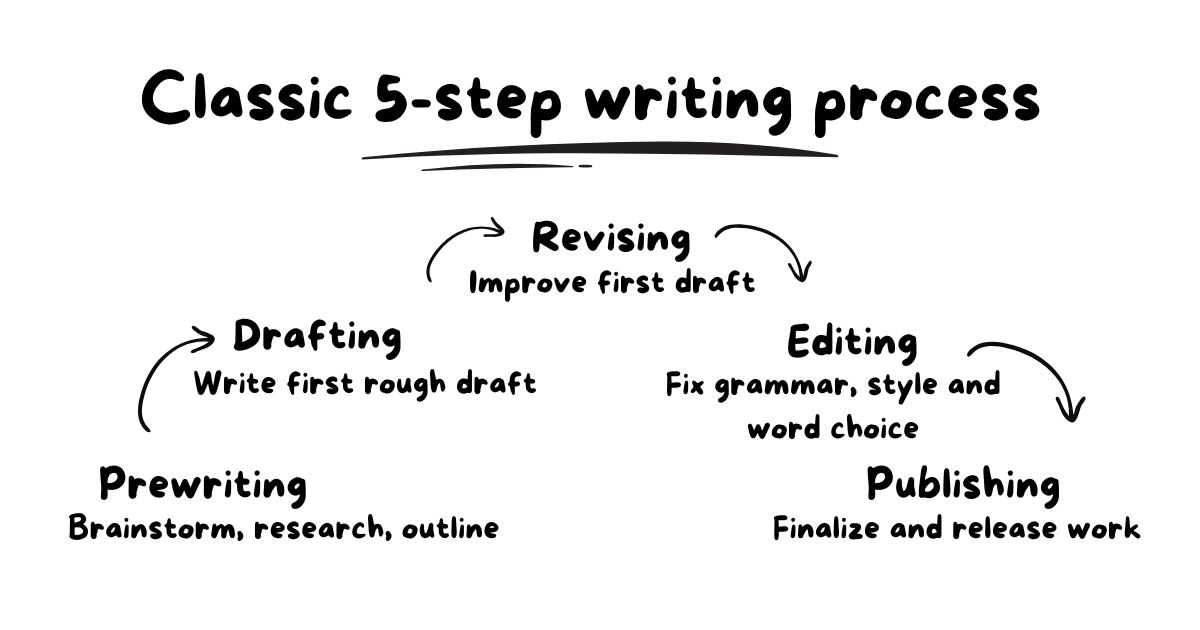
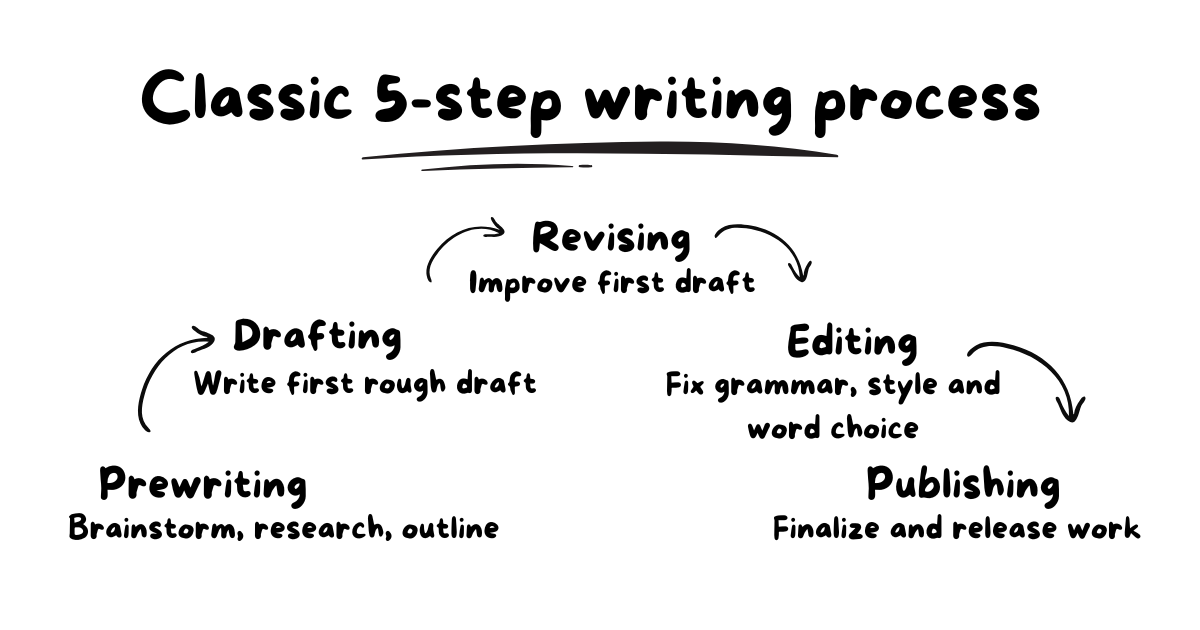
- Prewriting: The planning stage is where you generate ideas, do research, and organize an outline to portray the message you want to send to your readers
- Drafting: Some writers consider this the hardest part of the writing process. You write a rough version of your outline without letting perfection stand in the way of your progress. The focus is on getting your ideas, notes, thoughts, and writing them down on paper.
- Revising: Once your first draft is complete, you’ll need to revise the content to improve it. This means reviewing the bigger-picture idea, reshaping ideas, strengthening arguments or scenes, and improving the overall structure.
- Editing: Editing is a more detailed review of your work. You’ll mostly focus on grammar, style, and word choice to make sure your work is clear and professional.
- Publishing: The final stage after editing. This is the part where you share your work with its intended audience.
Best for: Students and structured writers
2. Snowflake Method (popular in fiction-writing)
The Snowflake method was invented by award-winning novelist Randy Ingermanson, who taught this method for designing and writing a novel.
The concept is to start small, then expand the story step by step, building more complex ideas/scenes into the story, similar to a snowflake growing outward.
To summarize the method:
Step one: Start by writing a one-sentence summary of your story
Step two: Expand the one-sentence summary into a five-sentence paragraph (beginning, middle, end)
Step three: Write a one-page summary for each main character (goals, motivations, conflicts, etc)
Step four: Turn each sentence from step two paragraph into its own paragraph, creating a page-long synopsis
Step five: Write detailed character descriptions for each character (backstory, personality, evolution)
Step six: Turn each paragraph of the synopsis into a full page (about 4 pages in total)
Step seven: Break the story down into scenes or chapters
Step eight: Write a multi-paragraph description of each scene
Step nine: Use the scene guide to write your first draft quickly
Step ten: Edit and polish your first draft
Best for: Fiction writers, novelists, creative writers
3. Hero’s Journey (the mythic structure)
Introduced by Joseph Campbell and adapted for writers by Christopher Vogler, this is a powerful writing process for creating epic quests and character transformations.
The hero’s journey focuses on the main character’s journey throughout the story. It’s more detailed than the Three-Act Structure and taps into universal mythic patterns.
The hero’s journey is a 12-stage act that forms a cycle.

The 12 stages that form a hero’s journey:
- Ordinary world – the hero’s normal life before the story begins
- Call to adventure – the hero is presented with a challenge or adventure
- Refusal of the call – the hero hesitates out of fear or obligation
- Meeting the mentor – the hero encounters a wise figure who prepares them for their journey
- Crossing the first threshold – the hero commits to the adventure and enters the special world
- Test, allies, and enemies – the hero learns the rules of the new world and faces initial challenges
- Approach to the inmost cave – the hero gets closer to their great fear or the central danger
- Ordeal – the hero faces a major life-or-death crisis and their greatest fear
- Reward – the hero survives, overcomes the enemy, and claims a treasure or insight
- The road back – the hero deals with the consequences of the ordeal and must return to the ordinary world
- Resurrection – the hero faces a final, climactic test where everything is at stake and is transformed by the journey
- Return with the elixir – the hero returns home, changed, with something to benefit their world
Best for: Epic fantasy writers, sci-fi writers, and any story centered around profound personal transformation
4. The Save the Cat! Beat Sheet (for commercial fiction and screenplays)
Created by Blake Snyder, this is a precise and popular 15-beat structure, especially dominant in screenwriting but also highly effective for novelists aiming for a tight, marketable story.
The concept is to break your story into 15 beats or key events placed at specific page percentages.
Beat one (1%): A snapshot of the hero’s world before
Beat two (5%): Someone says the thematic premise of the movie (what the hero needs to learn)
Beat three (1 – 10%): Explore the hero’s flawed life
Beat four (10%): The inciting incident
Beat five (10 – 20%): The hero hesitates
Beat six (20%): The hero chooses to act and enters the new world
Beat seven (22%): Often a love story or subplot that carries the theme
Beat eight (20-55%): The promise of the premise. This is the trailer material
Beat nine (55%): A big win or a big loss that raises the stakes
Beat ten (55 – 75%): If they won at the midpoint, the villains regroup. If they lost, things get worse
Beat eleven (75%): The lowest point. The opposite of the midpoint. The hero is defeated
Beat twelve (75 – 80%): The hero laments their defeat
Beat thirteen (80%): The hero finds a solution, inspired by the theme and lessons learned
Beat fourteen (80 – 99%): The hero executes the new plan and triumphs
Beat fifteen (99 – 100%): Proof that the hero has changed
Best for: Writers targeting a commercial audience, especially in genre fiction like romance, thrillers, and YA
5. The Pomodoro Technique (for productivity and habit building)
Not a story structuring method but a productivity process that countless writers swear by to defeat procrastination and build a consistent writing habit.
The process is simple.
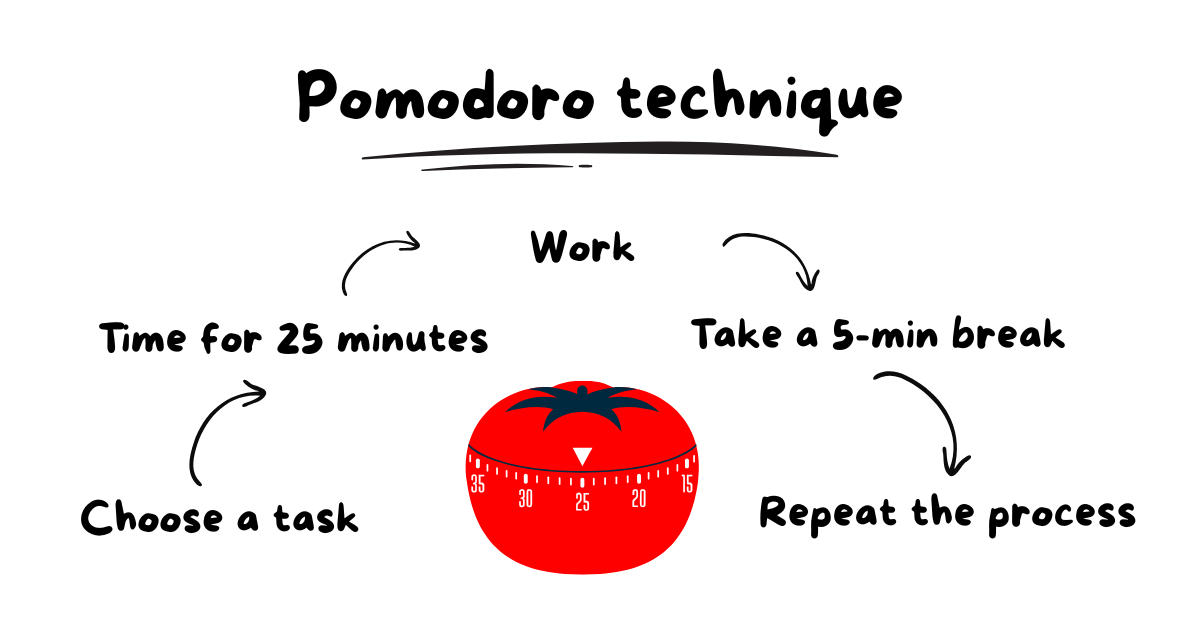
- Decide on your writing task (write 500 words, or revise Chapter 3)
- Set a timer for 25 minutes
- Work on only that task until the timer rings
- Take a short 5-minute break
- Every four “pomodoros,” take a longer break (15-30 minutes)
It works because it makes starting less daunting. You’re not committing to writing for four hours, just 25 minutes. It builds focus and prevents burnout.
Best for: Writers who want to build writing discipline
6. Pixar’s Story Structure (also known as the story spine)
Pixar is famous for stories that pull at the heartstrings while keeping their audience hooked. And that’s not an accident. They follow a clear storytelling structure that blends classic narrative principles with their own spin.
Here’s their story spine formula:
Once upon a time _______. Everyday ______. But one day ______ because of that _____ because of that _____ because of that ______. Until finally _____. And ever since that day _____.
To briefly explain each sentence:
- Once upon a time – the character and their normal world
- Every day – their routine/flow state
- One day – the inciting incident that disrupts the routine
- Because of that – the first consequence/action
- Because of that – the rising action, chain of events
- Because of that – another rising action. chain of events
- Until finally – the climax
- And ever since that day – the new normal/denouement
It works on two levels. The plot is where the character needs to meet a goal. And the emotional/thematic level where the theme focuses on the character’s evolution.
Best for: Any writer who aims to write powerful character-driven stories with universal themes for a broad audience
7. The Architect (plotter) vs. Gardener (pantser) vs. Plantsers (combination of both)
Most writers fall into one of these three categories: Plotters, Pantsers, or Plantsers. Plotters map out their stories in advance, creating detailed outlines before drafting.
Pantsers, on the other hand, dive straight in and let the story unfold as they write. And then there’s the Plantsers – a hybrid of both – writers who use just enough structure to guide their creativity while also leaving room for surprises along the way.
NaNoWriMo was a huge catalyst in spreading these terms in the early 2000s. Panster is short for flying by the seat of your pants, while Plotter is to plot extensively.
Best for: Structured writers (plotter), Discovery writers (pantser), and those who benefit from doing both
8. The Kishōtenketsu (Eastern 4-act story structure)
This is an East Asian narrative structure, prevalent in Chinese, Korean, and Japanese storytelling (including several Studio Ghibli films), that offers a fascinating alternative to the Western conflict-driven model.
The four acts:
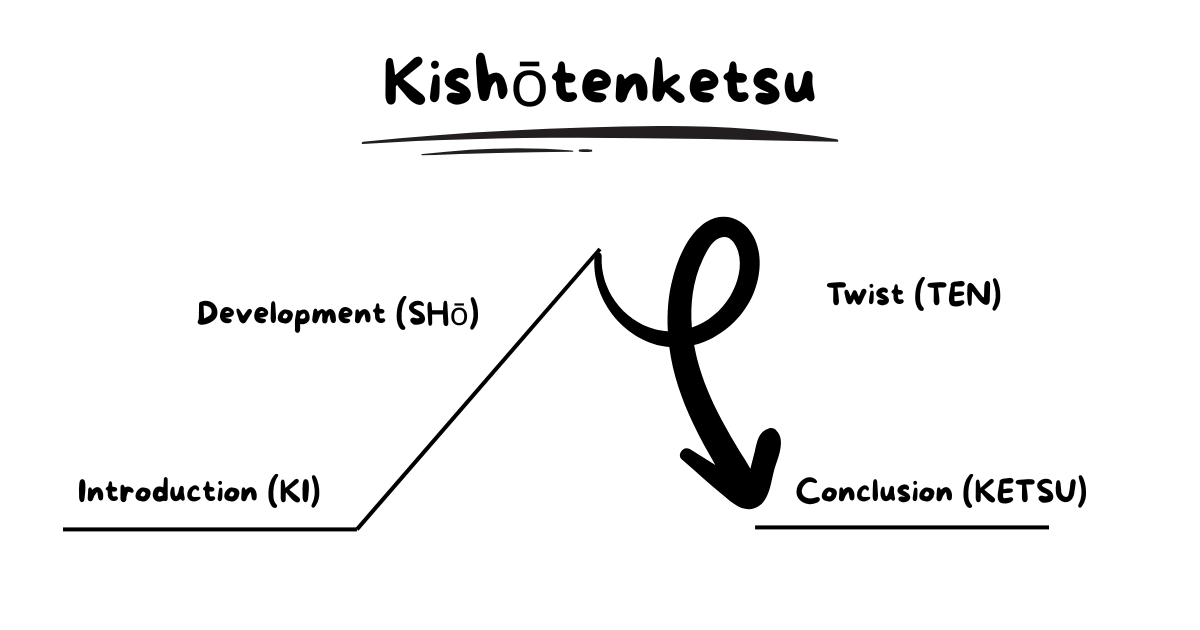
- Ki (起) – introduces the characters, world, and status quo
- Shō (承) – follows the natural progression of the introduction without introducing major conflict. It deepens the established world
- Ten (転) – the crucial element. A new, unexpected element is introduced that recontextualizes everything that came before. It is not necessarily a conflict or battle, but a revelation or a shift in perspective
- Ketsu (結) – the story reconciles the original world with the new element to form a new and harmonious conclusion
Best for: Writers who focus on slice-of-life narratives and explore perspective and misunderstanding











Leave a Reply